
Between Jaffa and Tel Aviv, 1870-1930: A Memoir
The literary memoir of a founder of Tel Aviv, now available for the first time in an annotated English translation through Brandeis University Press.
The literary memoir of a founder of Tel Aviv, now available for the first time in an annotated English translation through Brandeis University Press.
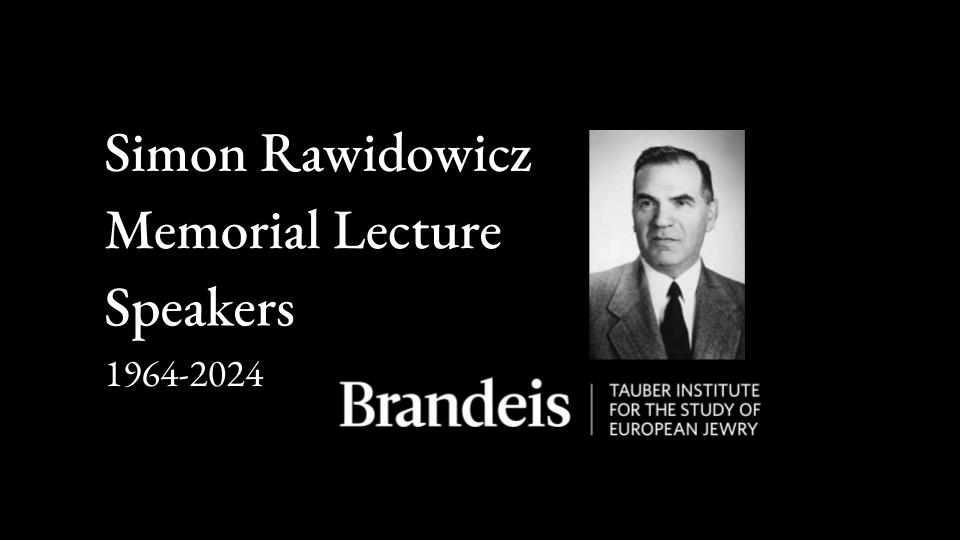
This year at the Annual Simon Rawidowicz Lecture, the Tauber Institute honored our past lecture speakers in the form of a slideshow presented at Susannah Heschel's lecture on April 4, 2024.
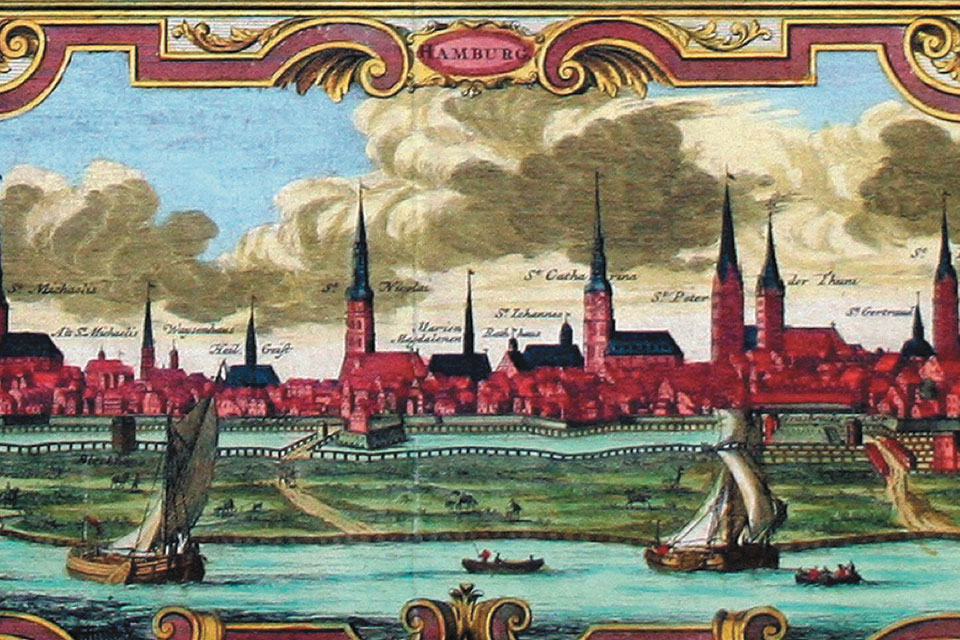
The Tauber Institute is devoted to the study of modern European Jewish history, thought, culture and society.
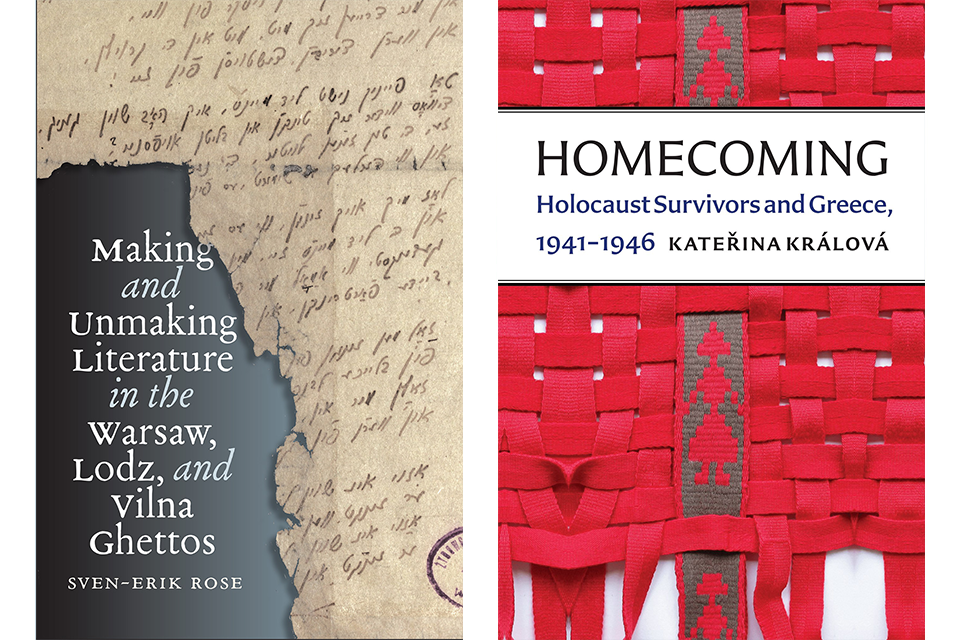
"Making and Unmaking Literature in the Warsaw, Lodz, and Vilna Ghettos" by Sven-Erik Rose and "Homecoming: Holocaust Survivors and Greece, 1941-1946" by Kateřina Králová

The Tauber Institute Series is dedicated to publishing compelling and innovative approaches to the study of modern European Jewish history, thought, culture and society.
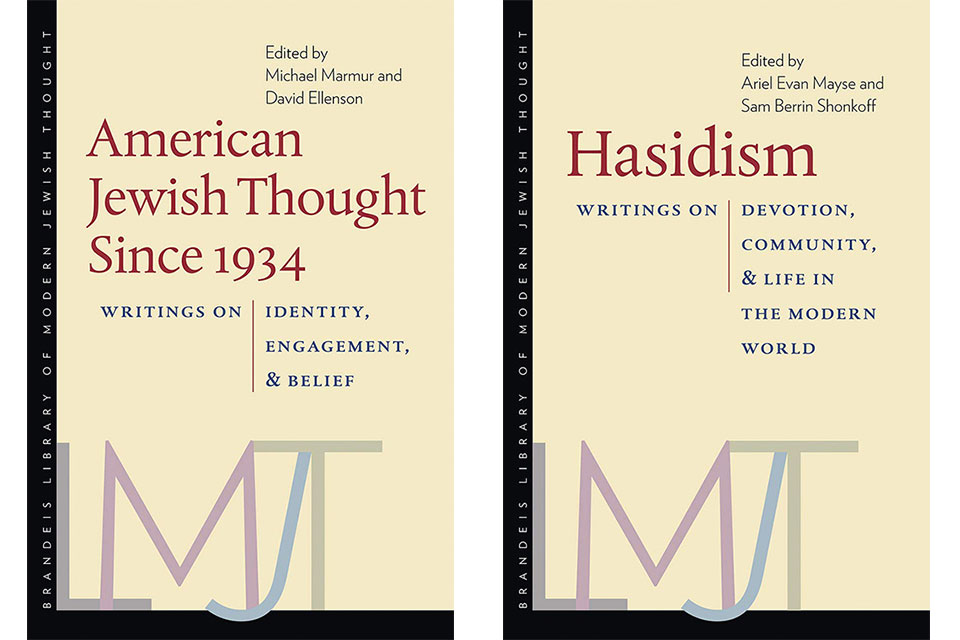
This library aims to redefine the canon of modern Jewish thought by publishing primary source readings from individual Jewish thinkers or groups of thinkers in reliable English translations.
The Tauber Institute is devoted to the study of modern European Jewish history, thought, culture and society. It has a special interest in studying the Holocaust and its aftermath within the context of modern European intellectual, political and social history.
The institute is organized on a multidisciplinary basis with the participation of scholars in Jewish studies, history, philosophy, political science, sociology, literature and other disciplines. The institute was founded in 1980 as a result of a major benefaction by Dr. Laszlo N. Tauber and is named in honor of his parents.
The Tauber Institute is pleased to announce the Spring 2026 classes taught by our esteemed faculty associates:
Jonathan Decter
Judeo-Arabic Literature (NEJS 177B)
An introduction to reading Judeo-Arabic texts from medieval Iraq, Spain, North Africa, and Egypt in their original contexts for students who have completed Arabic 30a or higher (or the equivalent).
Biblical Narratives in the Qur'an (NEJS 191A)
The Qur'an tells versions of stories known from the Hebrew Bible, New Testament, and post-biblical Jewish and Christian literature. Compares the Qur'anic renditions with those circulating in the Near East with a focus on major characters (Abraham, Moses, Jesus, Mary, etc.).
Eugene Sheppard
Trials from Antiquity to the Present (FYS 10A)
This seminar addresses the multifaceted nature of criminal trials through historical, literary, religious, legal, and political lenses. The course begins in history with Plato’s account of the prosecution of his teacher Socrates (399 BCE) for heresy and betrayal of Athenian gods and mores. It traces conversations about jurisprudential framing and authority of criminal trials and their key agents: judges, defendants, prosecutors, defense lawyers, officers of the court, as well as the surrounding public. We cut across cases from Europe to China and include archival research into the local trial of two Italian immigrants Sacco and Vanzetti. The class will also have the chance to experience how trials are conducted in a courtroom in present-day Boston.
Laura Jockusch
Antisemitic Stereotypes: Histories, Consequences, Responses (NEJS 142B)
Jews have been accused of simultaneously being capitalists and communists, powerful and weak, threatening and inferior. This course will explore the history and contemporary relevance of anti-Jewish stereotypes through texts, social media, and film and will teach students to develop strategies to counter and cope with such forms of prejudice in the present.
Revenge, Justice, and Reconciliation: Mass Atrocity Trials in the Long Shadow of Nazi Crimes (NEJS 136B)
Can crimes of the magnitude of the World War II and the Holocaust be redressed by legal means? This course explores the complex history of prosecuting Nazi crimes and how the political contexts and the legal frameworks have changed over time. It also studies the extra-judicial implications of mass atrocity trials: the societal discourse they stir, the educational lessons they teach, and historical records they create. Moreover, the course analyzes how the history of prosecuting Nazi crimes has impacted the legal redress of other gross human rights violations in the more recent past and whether the lessons learned from prosecuting Nazi crimes can be applied to the quest for racial justice in America today.